


How do the components of glass balls help filter paper achieve higher dust holding capacity and lower resistance?
Release Time : 2025-12-31
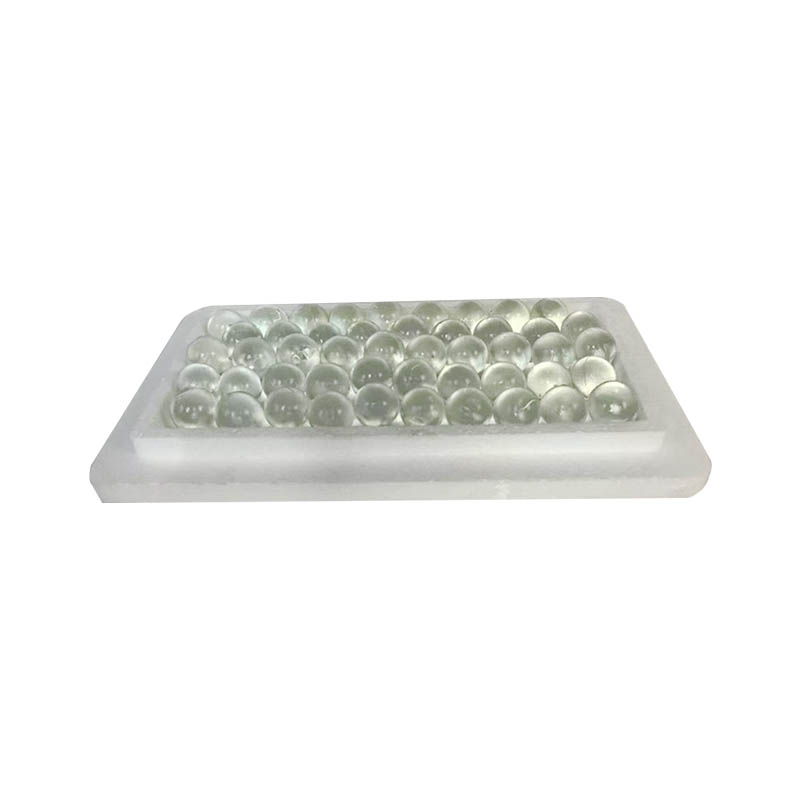
In the field of high-efficiency air filtration, the performance of filter paper often determines the effectiveness of the entire purification system. Whether used in hospital operating rooms, semiconductor cleanrooms, or high-end home air purifiers, a high-quality filter paper must intercept tiny particles while minimizing airflow obstruction—achieving an ideal balance between "high dust holding capacity" and "low resistance." The secret to this seemingly contradictory goal lies in a seemingly ordinary raw material: specially made glass balls. As the core raw material for producing glass microfibers, the chemical composition of glass balls is not arbitrarily proportioned but rather a precisely designed functional formula that directly determines the final filter paper's microstructure and aerodynamic performance.
First, component purity is the foundation for building a high-efficiency fiber network. Specially made glass balls are refined from high-purity silicon, boron, aluminum, and other oxides, with strict control over the content of impurities such as iron, sodium, and calcium. Impurities not only interfere with the glass melting process but also form tiny crystals or bubbles during fiber drawing, leading to uneven fiber thickness and even breakage. Uniform, smooth, and continuous ultrafine glass fibers are the prerequisite for forming a dense yet transparent filter. Only when each fiber is as fine as mist and has a clean surface can it naturally form a large number of micron-sized pores in random stacking—these pores, like a maze, are enough to capture particles while allowing airflow to pass through smoothly.
Secondly, specific oxide ratios regulate the flexibility and diameter distribution of the fibers. For example, the appropriate addition of boron oxide can significantly lower the softening temperature of the glass, making molten glass easier to stretch into submicron-sized fibers by high-speed airflow; while the introduction of alumina enhances the mechanical strength and thermal stability of the fibers, preventing breakage and pulverization due to vibration or temperature changes during use. More importantly, the optimized composition gives the fibers moderate flexibility during forming, rather than rigidity. These "soft filaments" can naturally interweave into a loose, multi-layered three-dimensional network structure during stacking, increasing the probability of particle collision and interception while preventing premature pore blockage, thus significantly improving dust holding capacity.
Furthermore, chemical stability ensures long-term performance without degradation. The microfibers formed from high-quality glass balls possess excellent moisture resistance, acid and alkali resistance, and oxidation resistance. This means that in humid environments or air containing chemical pollutants, the filter paper will not experience pore structure collapse or a sudden increase in resistance due to fiber corrosion, swelling, or embrittlement. Throughout its service life, the filter paper maintains its initial permeability and collection efficiency, avoiding the common problem of "clogging with use."
Furthermore, consistent composition ensures the reliability of mass production. Fluctuations in the composition of each batch of glass balls directly lead to changes in fiber diameter, softening point, and surface tension, thus affecting the uniformity and performance repeatability of the filter paper. High-quality glass ball suppliers ensure that each ball possesses the same melting behavior and fiber-forming characteristics through rigorous process control, enabling filter media manufacturers to continuously produce high-performance products under stable processes.
At a deeper level, the compositional design of glass balls embodies a material philosophy that defines end-use performance from the source. It does not pursue the ultimate in a single indicator, but rather constructs a microstructure ecosystem at the fiber scale characterized by "high interception, low resistance, and long lifespan" through multi-element synergy. This bottom-up performance foundation is far more fundamental and reliable than later coating or composite processes.
Ultimately, though small, glass balls are the "genetic carriers" of high-efficiency filter paper. Their chemical language defines the fiber's form; their pure essence ensures clean air. When a wisp of air passes through the filter paper, countless microparticles are silently trapped, while the airflow continues its smooth journey—behind this lies the silent wisdom of the specially designed glass balls, weaving a protective net in the microscopic world that is both tight and transparent. True high-efficiency filtration begins with the precise formulation of a single transparent glass ball.
First, component purity is the foundation for building a high-efficiency fiber network. Specially made glass balls are refined from high-purity silicon, boron, aluminum, and other oxides, with strict control over the content of impurities such as iron, sodium, and calcium. Impurities not only interfere with the glass melting process but also form tiny crystals or bubbles during fiber drawing, leading to uneven fiber thickness and even breakage. Uniform, smooth, and continuous ultrafine glass fibers are the prerequisite for forming a dense yet transparent filter. Only when each fiber is as fine as mist and has a clean surface can it naturally form a large number of micron-sized pores in random stacking—these pores, like a maze, are enough to capture particles while allowing airflow to pass through smoothly.
Secondly, specific oxide ratios regulate the flexibility and diameter distribution of the fibers. For example, the appropriate addition of boron oxide can significantly lower the softening temperature of the glass, making molten glass easier to stretch into submicron-sized fibers by high-speed airflow; while the introduction of alumina enhances the mechanical strength and thermal stability of the fibers, preventing breakage and pulverization due to vibration or temperature changes during use. More importantly, the optimized composition gives the fibers moderate flexibility during forming, rather than rigidity. These "soft filaments" can naturally interweave into a loose, multi-layered three-dimensional network structure during stacking, increasing the probability of particle collision and interception while preventing premature pore blockage, thus significantly improving dust holding capacity.
Furthermore, chemical stability ensures long-term performance without degradation. The microfibers formed from high-quality glass balls possess excellent moisture resistance, acid and alkali resistance, and oxidation resistance. This means that in humid environments or air containing chemical pollutants, the filter paper will not experience pore structure collapse or a sudden increase in resistance due to fiber corrosion, swelling, or embrittlement. Throughout its service life, the filter paper maintains its initial permeability and collection efficiency, avoiding the common problem of "clogging with use."
Furthermore, consistent composition ensures the reliability of mass production. Fluctuations in the composition of each batch of glass balls directly lead to changes in fiber diameter, softening point, and surface tension, thus affecting the uniformity and performance repeatability of the filter paper. High-quality glass ball suppliers ensure that each ball possesses the same melting behavior and fiber-forming characteristics through rigorous process control, enabling filter media manufacturers to continuously produce high-performance products under stable processes.
At a deeper level, the compositional design of glass balls embodies a material philosophy that defines end-use performance from the source. It does not pursue the ultimate in a single indicator, but rather constructs a microstructure ecosystem at the fiber scale characterized by "high interception, low resistance, and long lifespan" through multi-element synergy. This bottom-up performance foundation is far more fundamental and reliable than later coating or composite processes.
Ultimately, though small, glass balls are the "genetic carriers" of high-efficiency filter paper. Their chemical language defines the fiber's form; their pure essence ensures clean air. When a wisp of air passes through the filter paper, countless microparticles are silently trapped, while the airflow continues its smooth journey—behind this lies the silent wisdom of the specially designed glass balls, weaving a protective net in the microscopic world that is both tight and transparent. True high-efficiency filtration begins with the precise formulation of a single transparent glass ball.