


How do the uniform melting characteristics of glass balls improve the fiber consistency of the final filter paper when used as a precursor for preparing microfibers?
Release Time : 2026-04-22
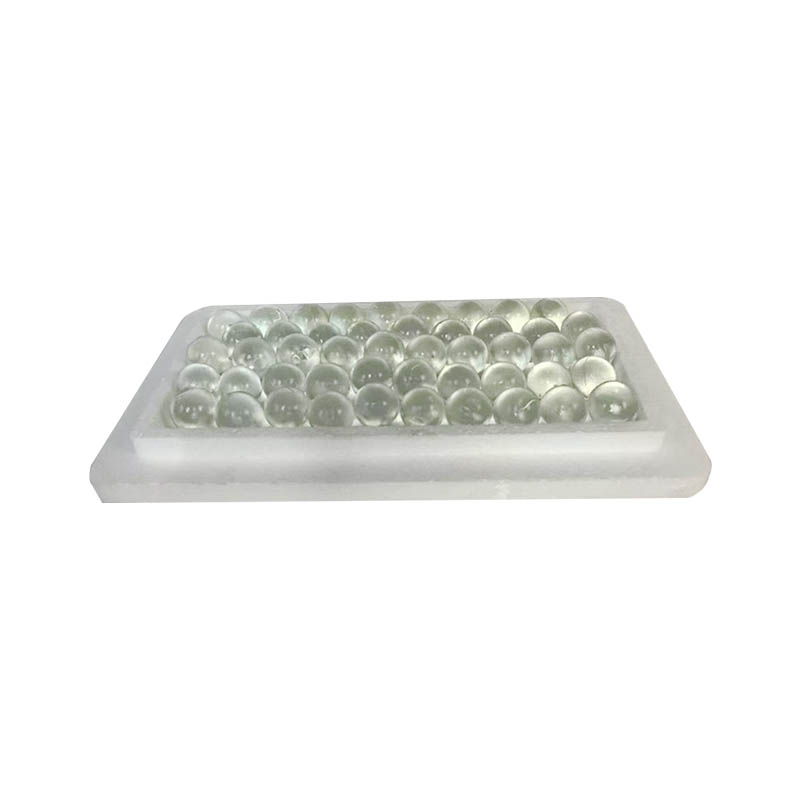
As an important precursor for preparing glass microfibers for air filter paper, the uniformity of glass balls during the high-temperature melting process directly affects the consistency of the final fiber structure. Compared to irregular fragments or mixed raw materials, glass balls have natural advantages in terms of compositional stability, morphological consistency, and melting behavior, thus providing a more stable foundation for the formation of high-quality microfibers.
1. The Foundation of Compositional Stability from Uniform Melting
Glass balls are typically prepared through precise batching and high-temperature forming, resulting in a relatively uniform distribution of their internal chemical composition. During the melting stage, the softening and melting processes of each glass ball are essentially synchronized, avoiding melting point fluctuations caused by localized compositional differences. This uniform melting characteristic makes the overall melt properties more stable, reducing the problem of inconsistent microfiber composition from the source and providing a homogeneous melt foundation for the subsequent fiber drawing process.
2. Stable Melt Flow Improves Fiber Diameter Consistency
During high-temperature gas flow or centrifugal fiber drawing, the flow state of the melt directly affects the diameter and morphology of the fibers. Because the melt viscosity of glass balls is more uniform after melting, their stress response during stretching is more consistent, resulting in reduced fluctuations in the diameter of microfibers generated in different regions. This stability helps to form a more concentrated and less dispersed fiber structure, thereby improving the overall consistency of the filter paper.
3. Reduced Impact of Local Overheating and Unmelted Particles
In traditional raw material systems, due to varying particle sizes, premature melting or incomplete melting in certain areas can easily occur, affecting fiber continuity. Glass balls, with their regular geometry and uniform size, experience more uniform heating during the heating process, making it less prone to unmelted residues or overheating agglomeration. This characteristic effectively avoids fiber breakage or uneven thickness, improving the continuity and stability of fiber formation.
4. Enhanced Controllability of the Fiber Forming Process
Uniform melting not only affects the material's inherent state but also enhances the controllability of the entire fiber formation process. Under stable melt supply conditions, drawing parameters such as airflow velocity, draw ratio, and cooling rate are more easily maintained within ideal ranges, making the fiber formation process more predictable. This improved process controllability significantly enhances the consistency between different batches of products, facilitating stable industrial production.
5. Improved Filter Paper Structure Uniformity and Filtration Performance
Due to the highly uniform diameter distribution of microfibers, they can form a more regular three-dimensional pore structure during the web-forming process. This structural uniformity directly affects the filtration efficiency and pressure drop performance of air filter paper, making it more stable in capturing particulate matter. Simultaneously, the uniform fiber network also helps improve the overall mechanical strength and service life of the filter paper.
In summary, the uniform melting characteristics of glass balls in microfiber preparation significantly improve the overall performance of air filter paper by enhancing melt stability, optimizing the fiber drawing process control, and improving fiber structure consistency. This continuous advantage from raw materials to finished product makes it of significant application value in the manufacture of high-end filter materials.
1. The Foundation of Compositional Stability from Uniform Melting
Glass balls are typically prepared through precise batching and high-temperature forming, resulting in a relatively uniform distribution of their internal chemical composition. During the melting stage, the softening and melting processes of each glass ball are essentially synchronized, avoiding melting point fluctuations caused by localized compositional differences. This uniform melting characteristic makes the overall melt properties more stable, reducing the problem of inconsistent microfiber composition from the source and providing a homogeneous melt foundation for the subsequent fiber drawing process.
2. Stable Melt Flow Improves Fiber Diameter Consistency
During high-temperature gas flow or centrifugal fiber drawing, the flow state of the melt directly affects the diameter and morphology of the fibers. Because the melt viscosity of glass balls is more uniform after melting, their stress response during stretching is more consistent, resulting in reduced fluctuations in the diameter of microfibers generated in different regions. This stability helps to form a more concentrated and less dispersed fiber structure, thereby improving the overall consistency of the filter paper.
3. Reduced Impact of Local Overheating and Unmelted Particles
In traditional raw material systems, due to varying particle sizes, premature melting or incomplete melting in certain areas can easily occur, affecting fiber continuity. Glass balls, with their regular geometry and uniform size, experience more uniform heating during the heating process, making it less prone to unmelted residues or overheating agglomeration. This characteristic effectively avoids fiber breakage or uneven thickness, improving the continuity and stability of fiber formation.
4. Enhanced Controllability of the Fiber Forming Process
Uniform melting not only affects the material's inherent state but also enhances the controllability of the entire fiber formation process. Under stable melt supply conditions, drawing parameters such as airflow velocity, draw ratio, and cooling rate are more easily maintained within ideal ranges, making the fiber formation process more predictable. This improved process controllability significantly enhances the consistency between different batches of products, facilitating stable industrial production.
5. Improved Filter Paper Structure Uniformity and Filtration Performance
Due to the highly uniform diameter distribution of microfibers, they can form a more regular three-dimensional pore structure during the web-forming process. This structural uniformity directly affects the filtration efficiency and pressure drop performance of air filter paper, making it more stable in capturing particulate matter. Simultaneously, the uniform fiber network also helps improve the overall mechanical strength and service life of the filter paper.
In summary, the uniform melting characteristics of glass balls in microfiber preparation significantly improve the overall performance of air filter paper by enhancing melt stability, optimizing the fiber drawing process control, and improving fiber structure consistency. This continuous advantage from raw materials to finished product makes it of significant application value in the manufacture of high-end filter materials.