


What are the unique characteristics and roles of glass balls in terms of thermal stability?
Release Time : 2026-03-12
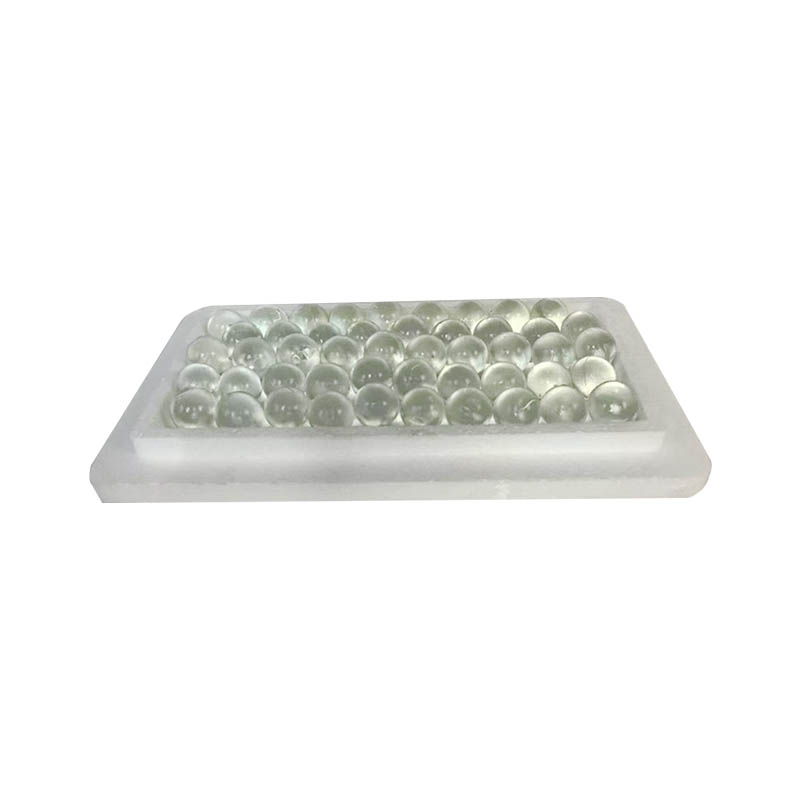
In the high-efficiency air filtration technology industry chain, glass fiber filter paper occupies a core position due to its superior filtration efficiency and low resistance characteristics. The performance of special glass balls—the key raw material for producing these glass microfibers—directly determines the quality of the final product.
1. Structural Integrity Under Extreme Temperature Changes: A Microscopic Defense Against Thermal Shock
The primary challenge faced by special glass balls in the production of air filter paper microfibers is extreme temperature fluctuations. The raw material glass balls must be rapidly immersed from room temperature into a platinum stencil at temperatures exceeding 1000 degrees Celsius for melting. The melt is then rapidly drawn into micron-sized fibers and cooled. During this process, ordinary glass often cracks or develops microcracks due to uneven distribution of internal thermal stress, leading to interrupted fiber drawing or reduced fiber strength. However, special glass balls designed specifically for filter paper production possess an extremely low coefficient of thermal expansion. This unique molecular structure results in negligible volume changes during drastic temperature changes, effectively offsetting the internal stress generated by thermal shock. This superior thermal stability ensures that the glass balls soften uniformly rather than break when entering the high-temperature zone, providing a solid physical foundation for continuous and stable fiber drawing operations.
2. Precise Control of High-Temperature Viscosity Characteristics: Ensuring the Uniformity of Microfiber Formation
Another unique aspect of thermal stability in special glass balls lies in the controllability of their high-temperature rheological behavior. Air filter paper requires extremely fine and uniformly distributed microfibers, which places stringent demands on the viscosity stability of the molten glass. Special glass balls are precisely formulated to have an extremely flat viscosity-temperature curve at high temperatures. This means that within the small temperature fluctuations of the fiber drawing process, the fluidity of the glass melt remains highly stable, preventing excessive flow due to localized overheating or solidification blockage due to temperature differences. This robustness in thermal properties allows the production line to draw fibers with diameters as small as submicron at extremely high speeds, while ensuring a smooth, nodule-free fiber surface. Without this thermal stability, the fiber diameter would fluctuate randomly, directly leading to uneven filter paper porosity and severely affecting filtration accuracy.
3. Synergistic Effect of Chemical Inertness and Thermal Stability: Extending Equipment Lifespan and Enhancing Purity
In high-temperature environments, thermal stability often complements chemical stability. Specialized glass balls maintain extremely high chemical inertness even in their molten state, making them unlikely to react with platinum filters or release volatile components. This characteristic not only prevents segregation of glass components and ensures the uniformity of the microfiber's chemical composition, but more importantly, it protects the expensive fiber drawing equipment. If the glass balls lack sufficient thermal stability, phase separation or crystallization can easily occur at high temperatures, clogging the filter pores, causing production shutdowns and cleaning, and potentially introducing impurities that contaminate the fibers, reducing the filter paper's ability to intercept ultrafine particles. Therefore, the thermal stability of specialized glass balls is actually a key barrier to maintaining the long-term, efficient, and pure operation of the entire microfiber production system.
In conclusion, the exceptional thermal stability of specialized glass balls is not merely a single physical indicator, but a core element throughout the entire air filter paper production process. It ensures a continuous supply of raw materials by resisting thermal shock, achieves precise microfiber molding by stabilizing high-temperature viscosity, and maintains the purity and durability of the system through a chemical-thermal synergistic effect.
1. Structural Integrity Under Extreme Temperature Changes: A Microscopic Defense Against Thermal Shock
The primary challenge faced by special glass balls in the production of air filter paper microfibers is extreme temperature fluctuations. The raw material glass balls must be rapidly immersed from room temperature into a platinum stencil at temperatures exceeding 1000 degrees Celsius for melting. The melt is then rapidly drawn into micron-sized fibers and cooled. During this process, ordinary glass often cracks or develops microcracks due to uneven distribution of internal thermal stress, leading to interrupted fiber drawing or reduced fiber strength. However, special glass balls designed specifically for filter paper production possess an extremely low coefficient of thermal expansion. This unique molecular structure results in negligible volume changes during drastic temperature changes, effectively offsetting the internal stress generated by thermal shock. This superior thermal stability ensures that the glass balls soften uniformly rather than break when entering the high-temperature zone, providing a solid physical foundation for continuous and stable fiber drawing operations.
2. Precise Control of High-Temperature Viscosity Characteristics: Ensuring the Uniformity of Microfiber Formation
Another unique aspect of thermal stability in special glass balls lies in the controllability of their high-temperature rheological behavior. Air filter paper requires extremely fine and uniformly distributed microfibers, which places stringent demands on the viscosity stability of the molten glass. Special glass balls are precisely formulated to have an extremely flat viscosity-temperature curve at high temperatures. This means that within the small temperature fluctuations of the fiber drawing process, the fluidity of the glass melt remains highly stable, preventing excessive flow due to localized overheating or solidification blockage due to temperature differences. This robustness in thermal properties allows the production line to draw fibers with diameters as small as submicron at extremely high speeds, while ensuring a smooth, nodule-free fiber surface. Without this thermal stability, the fiber diameter would fluctuate randomly, directly leading to uneven filter paper porosity and severely affecting filtration accuracy.
3. Synergistic Effect of Chemical Inertness and Thermal Stability: Extending Equipment Lifespan and Enhancing Purity
In high-temperature environments, thermal stability often complements chemical stability. Specialized glass balls maintain extremely high chemical inertness even in their molten state, making them unlikely to react with platinum filters or release volatile components. This characteristic not only prevents segregation of glass components and ensures the uniformity of the microfiber's chemical composition, but more importantly, it protects the expensive fiber drawing equipment. If the glass balls lack sufficient thermal stability, phase separation or crystallization can easily occur at high temperatures, clogging the filter pores, causing production shutdowns and cleaning, and potentially introducing impurities that contaminate the fibers, reducing the filter paper's ability to intercept ultrafine particles. Therefore, the thermal stability of specialized glass balls is actually a key barrier to maintaining the long-term, efficient, and pure operation of the entire microfiber production system.
In conclusion, the exceptional thermal stability of specialized glass balls is not merely a single physical indicator, but a core element throughout the entire air filter paper production process. It ensures a continuous supply of raw materials by resisting thermal shock, achieves precise microfiber molding by stabilizing high-temperature viscosity, and maintains the purity and durability of the system through a chemical-thermal synergistic effect.