


How do glass microfibers protect respiratory safety and equipment performance?
Release Time : 2026-03-16
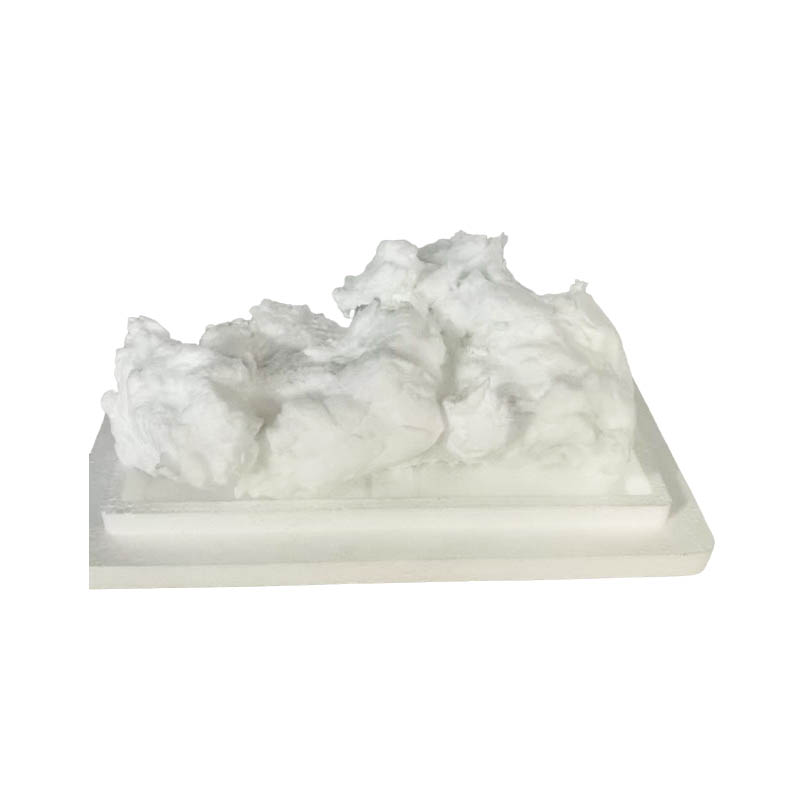
In modern air purification technology and precision filtration, centrifugal glass microfibers, with their superior physical properties and unique microstructure, have become the core material for manufacturing high-end air filter paper. These fine fibers, typically in the micrometer or even submicrometer range in diameter, are formed by spinning molten glass in a high-speed centrifuge. They intertwine to form a dense yet fluffy three-dimensional network, constructing a robust defense line capable of intercepting tiny particles and blocking harmful substances, silently protecting the healthy operation of internal combustion engines, the cleanliness of industrial environments, and the safety of the human respiratory system.
The manufacturing process of centrifugal glass microfibers endows them with unparalleled structural advantages. When molten glass at high temperatures is injected into a high-speed centrifuge, the immense centrifugal force stretches it into extremely fine fibers, which solidify during cooling. This process not only creates extremely fine fiber diameters but also endows them with extremely high specific surface area and excellent flexibility. During the manufacturing process of filter paper, these microfibers are randomly stacked through a wet-forming process, forming a filter medium with extremely high porosity and uniform pore size distribution. This intricate internal structure forces the airflow to traverse countless tortuous paths as it passes through the filter paper, greatly increasing the probability of particle contact and collision with the fibers, thus laying the physical foundation for highly efficient interception.
In terms of filtration mechanism, centrifugal glass microfiber filter paper exhibits multi-layered capture capabilities. For larger particles, the filter paper directly blocks them on its surface through a sieving effect; while for tiny dust, smoke, and even bacteria and viruses, capture is mainly achieved through diffusion, interception, and inertial impaction effects. When tiny particles move with the airflow and approach the fibers, Brownian motion causes them to deviate from their streamlines and come into contact with and be adsorbed by the fibers; slightly larger particles, due to inertia, cannot follow the airflow's direction and directly collide with the fibers. Because the glass microfiber surface is smooth and possesses electrostatic properties, it can effectively adsorb charged particles, further improving filtration efficiency. This high-efficiency interception capability across the entire particle size range allows centrifugal glass microfiber filter paper to achieve a filtration accuracy of over 99.9% while maintaining low airflow resistance, perfectly balancing the trade-off between filtration efficiency and permeability.
In addition to its superior filtration performance, centrifugal glass microfiber also possesses excellent chemical and thermal stability. Composed of inorganic silicates, glass microfiber is non-flammable, non-corrosive, and resistant to acid and alkali corrosion, maintaining structural integrity and performance stability over long periods in high-temperature, high-humidity, or corrosive gas environments. In automotive engine intake systems, facing the high-temperature engine compartment environment and air containing oil and impurities, this filter paper will not deform, melt, or degrade, ensuring a continuous supply of clean air to the engine, preventing cylinder wear, and extending equipment life. In industrial dust removal and HVAC systems, it also withstands harsh operating conditions, ensuring consistently high-efficiency air purification, reducing maintenance frequency and operating costs.
With increasingly stringent environmental standards and ever-improving air quality requirements, the application scenarios for centrifugal glass microfiber filter paper are continuously expanding. From air intake filtration in heavy-duty trucks and construction machinery to high-efficiency filters in home air purifiers and fresh air systems, and ultra-clean filtration in biosafety laboratories, this material is playing an increasingly crucial role. Manufacturers are further improving the dust holding capacity and lifespan of filter paper by optimizing fiber diameter distribution, adjusting slurry formulations, and introducing nano-coating technology, making it even more effective at capturing ultrafine particles such as PM2.5, pollen, and viral aerosols.
From the instantaneous spinning of molten glass into the final precision filter paper, centrifugal glass microfibers, with their intricate microscopic structure, demonstrate the immense value of materials science in macroscopic applications. It is not only a physical barrier but also a bridge connecting clean air and human health. Every airflow that penetrates this micron-sized network is a test, and it consistently and resiliently intercepts dust and releases freshness, building an invisible yet indestructible safety barrier for the efficient operation of modern industry and the healthy lives of humanity, making every breath purer and safer.
The manufacturing process of centrifugal glass microfibers endows them with unparalleled structural advantages. When molten glass at high temperatures is injected into a high-speed centrifuge, the immense centrifugal force stretches it into extremely fine fibers, which solidify during cooling. This process not only creates extremely fine fiber diameters but also endows them with extremely high specific surface area and excellent flexibility. During the manufacturing process of filter paper, these microfibers are randomly stacked through a wet-forming process, forming a filter medium with extremely high porosity and uniform pore size distribution. This intricate internal structure forces the airflow to traverse countless tortuous paths as it passes through the filter paper, greatly increasing the probability of particle contact and collision with the fibers, thus laying the physical foundation for highly efficient interception.
In terms of filtration mechanism, centrifugal glass microfiber filter paper exhibits multi-layered capture capabilities. For larger particles, the filter paper directly blocks them on its surface through a sieving effect; while for tiny dust, smoke, and even bacteria and viruses, capture is mainly achieved through diffusion, interception, and inertial impaction effects. When tiny particles move with the airflow and approach the fibers, Brownian motion causes them to deviate from their streamlines and come into contact with and be adsorbed by the fibers; slightly larger particles, due to inertia, cannot follow the airflow's direction and directly collide with the fibers. Because the glass microfiber surface is smooth and possesses electrostatic properties, it can effectively adsorb charged particles, further improving filtration efficiency. This high-efficiency interception capability across the entire particle size range allows centrifugal glass microfiber filter paper to achieve a filtration accuracy of over 99.9% while maintaining low airflow resistance, perfectly balancing the trade-off between filtration efficiency and permeability.
In addition to its superior filtration performance, centrifugal glass microfiber also possesses excellent chemical and thermal stability. Composed of inorganic silicates, glass microfiber is non-flammable, non-corrosive, and resistant to acid and alkali corrosion, maintaining structural integrity and performance stability over long periods in high-temperature, high-humidity, or corrosive gas environments. In automotive engine intake systems, facing the high-temperature engine compartment environment and air containing oil and impurities, this filter paper will not deform, melt, or degrade, ensuring a continuous supply of clean air to the engine, preventing cylinder wear, and extending equipment life. In industrial dust removal and HVAC systems, it also withstands harsh operating conditions, ensuring consistently high-efficiency air purification, reducing maintenance frequency and operating costs.
With increasingly stringent environmental standards and ever-improving air quality requirements, the application scenarios for centrifugal glass microfiber filter paper are continuously expanding. From air intake filtration in heavy-duty trucks and construction machinery to high-efficiency filters in home air purifiers and fresh air systems, and ultra-clean filtration in biosafety laboratories, this material is playing an increasingly crucial role. Manufacturers are further improving the dust holding capacity and lifespan of filter paper by optimizing fiber diameter distribution, adjusting slurry formulations, and introducing nano-coating technology, making it even more effective at capturing ultrafine particles such as PM2.5, pollen, and viral aerosols.
From the instantaneous spinning of molten glass into the final precision filter paper, centrifugal glass microfibers, with their intricate microscopic structure, demonstrate the immense value of materials science in macroscopic applications. It is not only a physical barrier but also a bridge connecting clean air and human health. Every airflow that penetrates this micron-sized network is a test, and it consistently and resiliently intercepts dust and releases freshness, building an invisible yet indestructible safety barrier for the efficient operation of modern industry and the healthy lives of humanity, making every breath purer and safer.