


How to achieve a balance between higher filtration accuracy and lower resistance in the preparation of ultrafine glass balls?
Release Time : 2026-03-26
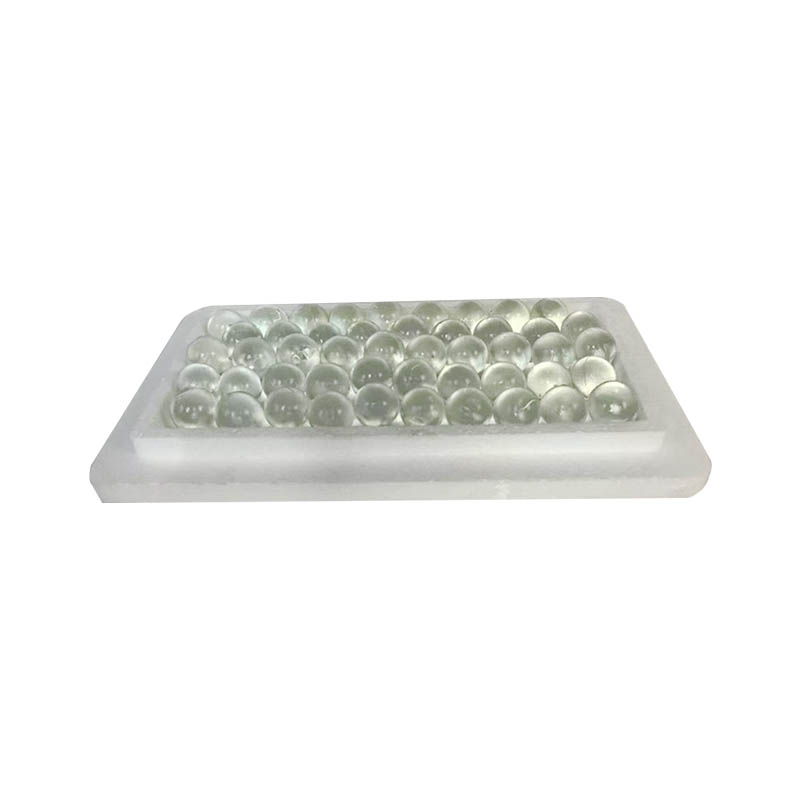
In the field of high-performance air filtration materials, ultrafine glass microfibers are widely used in high-efficiency filtration (HEPA) products due to their excellent interception capabilities. The composition and processing of special glass balls, as the basic raw material, directly determine the fiber structure and the final filter paper performance. Achieving a balance between improving filtration accuracy and reducing air resistance has become a key issue in the design and application of glass balls.
1. Optimized Composition Design: Laying the Foundation for Fiber Performance
The chemical composition of glass balls directly affects the fluidity and fiber-forming properties after melting. By rationally adjusting the proportions of components such as silica, boron oxide, and alkali metal oxides, the melt viscosity can be reduced while ensuring glass stability, making it easier to draw into ultrafine fibers. The finer the fiber diameter, the larger the specific surface area, and the stronger the ability to capture tiny particles, thereby improving filtration accuracy. However, if the fibers are too fine and unevenly distributed, it can easily cause increased airflow resistance; therefore, "controllable fineness" needs to be achieved in the formulation.
2. Fiber Diameter and Distribution Control: The Key Balance Between Precision and Resistance
In ultrafine fiber structures, a single fine diameter is not optimal. Through synergistic control of the glass ball formulation and drawing process, a "multi-scale distribution" of fibers is achieved. This involves appropriately introducing fiber layers of different diameters while maintaining an overall fine fiber structure, resulting in a more rational pore structure. Fine fibers trap particles, while slightly coarser fibers maintain airflow channels, thus improving filtration efficiency while avoiding excessive resistance. This structural optimization essentially achieves performance balance through fiber network design.
3. Melting and Drawing Processes: Ensuring Uniform and Stable Structure
During the high-temperature melting and drawing process, the rheological properties of glass balls must remain stable. Melt fluctuations or the presence of impurities can lead to uneven fiber thickness, affecting the pore size distribution of the filter media. Therefore, strict control of glass ball purity and particle size consistency is necessary to ensure uniform melting. Simultaneously, optimizing the drawing airflow and traction speed keeps the fibers in a stable stretched state during formation, contributing to a uniform and continuous microfiber structure.
4. Pore Structure Control: Constructing a High-Efficiency, Low-Resistance Network
Filtration performance depends not only on the fiber itself but also on the overall pore structure. By adjusting the glass balls formulation and fiber-forming process, the fibers form a highly porosity and well-connected three-dimensional structure during web formation, effectively reducing airflow resistance. Simultaneously, rationally controlling the fiber packing density makes the filtration path more "tortuous but not clogged," extending the particle capture path while ensuring smooth airflow.
5. Post-treatment and Composite Technology: Further Optimizing Performance
After fiber formation, post-treatment processes can further enhance overall performance. For example, surface modification or electrostatic electret treatment can enhance the adsorption capacity for fine particles, thereby improving filtration efficiency without significantly increasing resistance. Furthermore, composite glass microfibers with other materials can optimize airflow distribution while maintaining strength, achieving superior filtration results.
Achieving a balance between high filtration accuracy and low resistance in glass balls requires coordinated optimization across multiple aspects, including composition design, fiber structure, process control, and post-treatment. Through systematic control, not only can filter material performance be improved, but the demands for high-efficiency and energy-saving air filtration can also be met.
1. Optimized Composition Design: Laying the Foundation for Fiber Performance
The chemical composition of glass balls directly affects the fluidity and fiber-forming properties after melting. By rationally adjusting the proportions of components such as silica, boron oxide, and alkali metal oxides, the melt viscosity can be reduced while ensuring glass stability, making it easier to draw into ultrafine fibers. The finer the fiber diameter, the larger the specific surface area, and the stronger the ability to capture tiny particles, thereby improving filtration accuracy. However, if the fibers are too fine and unevenly distributed, it can easily cause increased airflow resistance; therefore, "controllable fineness" needs to be achieved in the formulation.
2. Fiber Diameter and Distribution Control: The Key Balance Between Precision and Resistance
In ultrafine fiber structures, a single fine diameter is not optimal. Through synergistic control of the glass ball formulation and drawing process, a "multi-scale distribution" of fibers is achieved. This involves appropriately introducing fiber layers of different diameters while maintaining an overall fine fiber structure, resulting in a more rational pore structure. Fine fibers trap particles, while slightly coarser fibers maintain airflow channels, thus improving filtration efficiency while avoiding excessive resistance. This structural optimization essentially achieves performance balance through fiber network design.
3. Melting and Drawing Processes: Ensuring Uniform and Stable Structure
During the high-temperature melting and drawing process, the rheological properties of glass balls must remain stable. Melt fluctuations or the presence of impurities can lead to uneven fiber thickness, affecting the pore size distribution of the filter media. Therefore, strict control of glass ball purity and particle size consistency is necessary to ensure uniform melting. Simultaneously, optimizing the drawing airflow and traction speed keeps the fibers in a stable stretched state during formation, contributing to a uniform and continuous microfiber structure.
4. Pore Structure Control: Constructing a High-Efficiency, Low-Resistance Network
Filtration performance depends not only on the fiber itself but also on the overall pore structure. By adjusting the glass balls formulation and fiber-forming process, the fibers form a highly porosity and well-connected three-dimensional structure during web formation, effectively reducing airflow resistance. Simultaneously, rationally controlling the fiber packing density makes the filtration path more "tortuous but not clogged," extending the particle capture path while ensuring smooth airflow.
5. Post-treatment and Composite Technology: Further Optimizing Performance
After fiber formation, post-treatment processes can further enhance overall performance. For example, surface modification or electrostatic electret treatment can enhance the adsorption capacity for fine particles, thereby improving filtration efficiency without significantly increasing resistance. Furthermore, composite glass microfibers with other materials can optimize airflow distribution while maintaining strength, achieving superior filtration results.
Achieving a balance between high filtration accuracy and low resistance in glass balls requires coordinated optimization across multiple aspects, including composition design, fiber structure, process control, and post-treatment. Through systematic control, not only can filter material performance be improved, but the demands for high-efficiency and energy-saving air filtration can also be met.