


How Is Glass Microfiber Made for Filtration?
Release Time : 2026-05-21
Glass microfiber is a high-performance material that serves as the backbone of modern air and liquid filtration systems. Renowned for its ability to capture microscopic particles while maintaining excellent airflow, this material is primarily manufactured through a sophisticated industrial process known as centrifugal spinning. The journey of creating glass microfiber for filter paper involves several precise stages, transforming raw mineral ingredients into a delicate, cotton-like web of ultra-fine fibers.
The production process begins with the careful selection and preparation of raw materials. High-quality minerals such as quartz sand, feldspar, limestone, and specific chemical additives like borax and soda ash are gathered. These ingredients are meticulously weighed and blended in exact proportions to achieve a specific chemical composition. The mixture typically contains silica (SiO2) as the primary component, along with controlled amounts of alumina, calcium oxide, magnesium oxide, and alkali metal oxides. This precise formulation is crucial because it dictates the melting temperature, viscosity, and ultimate physical properties of the glass fibers, ensuring they possess the necessary chemical stability and strength for filtration purposes.
Once the raw batch is thoroughly mixed, it is fed into a high-temperature furnace. Inside the furnace, the mixture undergoes a melting process at temperatures ranging from 1300°C to 1500°C. This intense heat transforms the solid powder into a homogeneous, molten glass liquid. After the glass has been fully melted and clarified to remove any bubbles or impurities, the temperature is carefully lowered to a specific working range, usually between 1200°C and 1300°C. Maintaining strict control over the temperature and viscosity of the molten glass at this stage is essential for the subsequent fiber-forming process.
The core technology behind creating microfibers is the centrifugal spinning method. The molten glass is guided through a feeder system and introduced onto a high-speed rotating spinner or centrifugal disk. This disk, which can spin at speeds of 2000 to 4000 revolutions per minute, features thousands of tiny holes along its side walls. Under the powerful force of centrifugal action, the molten glass is forced outward through these small apertures, forming continuous streams of primary glass filaments. As these filaments are ejected horizontally from the spinning disk, they begin to cool naturally.
Immediately after leaving the spinner, the primary filaments encounter a secondary attenuation process. A ring-shaped burner surrounding the centrifuge ejects a high-velocity stream of hot gas, often a mixture of natural gas and air. This high-speed gas flow stretches and pulls the primary filaments, drastically reducing their diameter to create ultra-fine microfibers, typically measuring less than 5 micrometers in diameter. In advanced manufacturing setups, an additional compressed air ring may be positioned below the spinner to provide further cooling and stretching, ensuring the fibers achieve an exceptionally fine and uniform thickness.
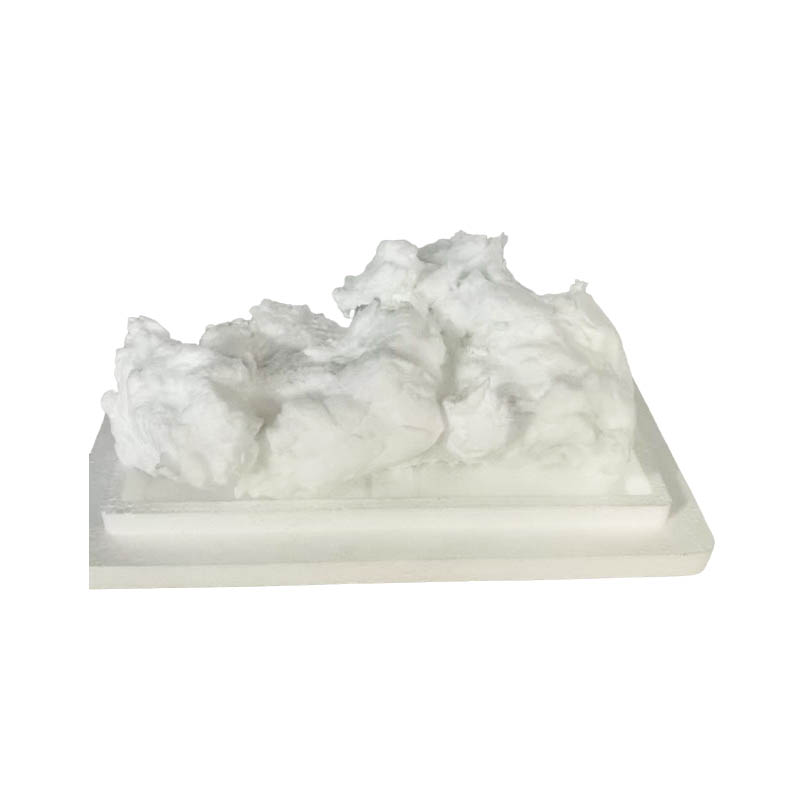
As the attenuated microfibers fall downward, they are collected on a moving conveyor screen below. During this descent, the fibers intertwine randomly to form a loose, non-woven mat that resembles cotton wool. This web of fibers creates a complex three-dimensional structure with countless microscopic pores. Once a sufficient thickness is achieved, this mat is processed into rolls of glass microfiber paper. The resulting filter media possesses superior characteristics, including high porosity, excellent dust-holding capacity, and strong resistance to moisture and chemicals, making it the ideal choice for high-efficiency particulate air (HEPA) filters and various industrial purification applications.
The production process begins with the careful selection and preparation of raw materials. High-quality minerals such as quartz sand, feldspar, limestone, and specific chemical additives like borax and soda ash are gathered. These ingredients are meticulously weighed and blended in exact proportions to achieve a specific chemical composition. The mixture typically contains silica (SiO2) as the primary component, along with controlled amounts of alumina, calcium oxide, magnesium oxide, and alkali metal oxides. This precise formulation is crucial because it dictates the melting temperature, viscosity, and ultimate physical properties of the glass fibers, ensuring they possess the necessary chemical stability and strength for filtration purposes.
Once the raw batch is thoroughly mixed, it is fed into a high-temperature furnace. Inside the furnace, the mixture undergoes a melting process at temperatures ranging from 1300°C to 1500°C. This intense heat transforms the solid powder into a homogeneous, molten glass liquid. After the glass has been fully melted and clarified to remove any bubbles or impurities, the temperature is carefully lowered to a specific working range, usually between 1200°C and 1300°C. Maintaining strict control over the temperature and viscosity of the molten glass at this stage is essential for the subsequent fiber-forming process.
The core technology behind creating microfibers is the centrifugal spinning method. The molten glass is guided through a feeder system and introduced onto a high-speed rotating spinner or centrifugal disk. This disk, which can spin at speeds of 2000 to 4000 revolutions per minute, features thousands of tiny holes along its side walls. Under the powerful force of centrifugal action, the molten glass is forced outward through these small apertures, forming continuous streams of primary glass filaments. As these filaments are ejected horizontally from the spinning disk, they begin to cool naturally.
Immediately after leaving the spinner, the primary filaments encounter a secondary attenuation process. A ring-shaped burner surrounding the centrifuge ejects a high-velocity stream of hot gas, often a mixture of natural gas and air. This high-speed gas flow stretches and pulls the primary filaments, drastically reducing their diameter to create ultra-fine microfibers, typically measuring less than 5 micrometers in diameter. In advanced manufacturing setups, an additional compressed air ring may be positioned below the spinner to provide further cooling and stretching, ensuring the fibers achieve an exceptionally fine and uniform thickness.
As the attenuated microfibers fall downward, they are collected on a moving conveyor screen below. During this descent, the fibers intertwine randomly to form a loose, non-woven mat that resembles cotton wool. This web of fibers creates a complex three-dimensional structure with countless microscopic pores. Once a sufficient thickness is achieved, this mat is processed into rolls of glass microfiber paper. The resulting filter media possesses superior characteristics, including high porosity, excellent dust-holding capacity, and strong resistance to moisture and chemicals, making it the ideal choice for high-efficiency particulate air (HEPA) filters and various industrial purification applications.